The four phases, in plain English
1. Menstrual phase (your period)
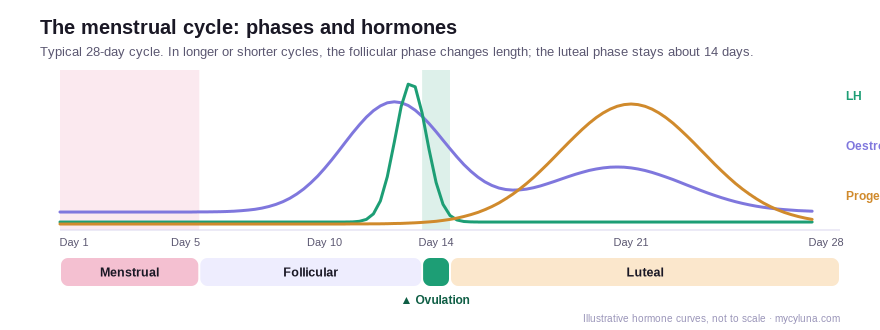
Day 1 is the first day of real bleeding, not spotting. Hormone levels are low and the womb lining sheds. The NHS says periods usually last 2 to 7 days.
2. Follicular phase
This overlaps with your period and runs until ovulation. Follicles in the ovary grow and produce oestrogen, which rebuilds the womb lining. Many people notice more energy as oestrogen rises. This is the phase that stretches or shrinks when your cycle length changes.
3. Ovulation
Rising oestrogen triggers a surge of luteinising hormone (LH), and an egg is released about a day later. The NHS puts the time from ovulation to the next period at around 10 to 16 days. Your fertile window is the 5 days before ovulation plus ovulation day: see the fertile window calculator.
4. Luteal phase
The empty follicle produces progesterone, which prepares the womb for a possible pregnancy. If no pregnancy happens, progesterone falls and your period starts. Breast tenderness, bloating and mood changes in the days before a period are linked to this phase. The luteal phase calculator goes deeper.
When to check your cycle with a doctor
See a GP if your cycles are often shorter than 21 days or longer than 35, if your periods have become irregular, if you have missed 3 periods in a row, or if bleeding is very heavy or painful. Read more in how late a period can be before you should worry.